
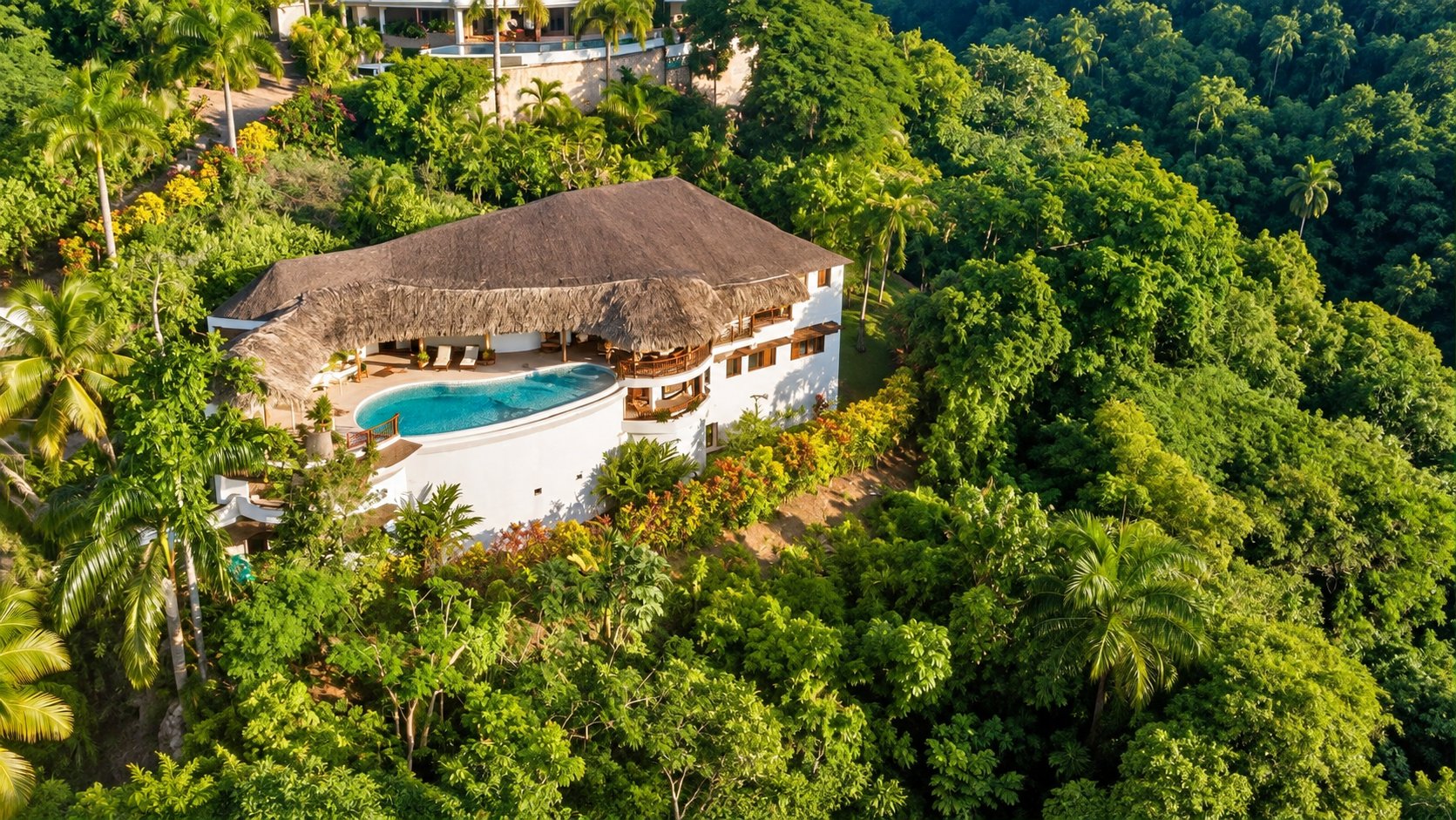
Which Las Terrenas Area Suits Which Buyer?
By Grant Robertson11 November 2026 10 min read
Compare Las Ballenas, Playa Bonita, Cosón, El Portillo and El Limón so you can match a Las Terrenas neighbourhood to how you will use the home.
If you are buying a home in Las Terrenas, the useful question is not which neighbourhood is “best.” It is which area matches how you will actually use the property. A short drive along the coast changes daily life: whether you can walk to the shops, whether you need a car, and how quiet the beach feels once you are home.
This article compares Las Ballenas, Playa Bonita, Cosón, El Portillo and El Limón for foreign buyers, side by side. It is general information, not a valuation or a forecast of prices. Visit in person, and have an independent lawyer check any property before you pay a deposit. To see what is currently for sale, start with homes in Las Terrenas.
Key Points:
Match the area to your routine first: walking to town, a quieter beach, more space, or a rural plot.
Town and Las Ballenas suit buyers who want services close by. Playa Bonita, Cosón and El Portillo usually mean a short drive.
El Limón is a different choice again: a village east of town, better suited to land or a quieter hillside home.
“Beachfront” does not mean a private beach. Under Law 305-68, the 60-metre maritime zone is public domain.
Use this comparison to shortlist two or three areas, then read the existing neighbourhood notes and walk the streets yourself.
How to compare the areas as a buyer
Before you fall for a single view, fix the criteria that will decide the purchase:
How you will use the home. A house you live in most of the year needs reliable access to shops, pharmacies and, if you work here, a dependable internet connection at that address. A second home can sit further from town if you will drive.
Whether you want to walk. Only the town centre and the closest streets of Las Ballenas make a car-light routine realistic for most people.
The type of property. Villas, condos and land are not spread evenly along the coast. Apartments cluster nearer town and Las Ballenas; larger lots and more secluded villas are more common as you move west to Cosón or inland toward El Limón.
Utilities and access at the exact address. Neighbouring streets can differ. Ask about electricity, water storage, internet and whether the road stays passable after heavy rain.
The shoreline. Law 305-68 measures a 60-metre maritime zone inland from the ordinary high-water line. Confirm with your lawyer where the titled boundary sits relative to that public strip.
TIP: Visit more than one area on the same trip, by day and in the evening if you can. Noise, traffic and beach use change between a weekday morning and a weekend night.
Who each area suits
Use this as a first filter, not as a substitute for a viewing:
You want to walk to shops, restaurants and the beach most days. Start with the town centre and Las Ballenas. You trade some of the seclusion of the outer bays for convenience.
You want a quieter beach and accept a short drive into town. Look at Playa Bonita, then compare it with El Portillo on the east side.
You want space, privacy and a more spread-out setting, and you will keep a car. Cosón is usually the stronger match, including the hills behind the bay.
You want a calmer residential stretch east of town, still a short drive from services. El Portillo is the area to test against Bonita and Las Ballenas.
You are looking for land, a rural house or a quieter village setting, not a walk-to-the-beach condo. Consider El Limón.
You want to compare the bay and the provincial capital with the Las Terrenas coast. Add Samaná to the same trip. It is a different town, not a suburb of Las Terrenas.
The sections below explain why those matches hold, and what to check on the ground.
Town centre and Las Ballenas: convenience first
The practical heart of Las Terrenas is the town centre, with shops, restaurants, supermarkets and everyday services concentrated here and along the main streets. Buyers who want to run errands on foot, walk to dinner, or stay close to services should begin here. Our town centre notes cover the trade-offs in more detail, including noise and parking.
Las Ballenas sits immediately west of that centre. It is a residential beach area close enough that many people still treat town as a short trip, on foot or by a very brief drive, depending on the exact street. You will typically see apartments and small condominium buildings, villas and some small hotels.
Best suited to: year-round or long-stay buyers who want beach living without giving up convenience; people who prefer not to drive for groceries; buyers comparing condos close to services.
Think twice if: you want a secluded lot, a very quiet night-time setting, or a large private garden away from town activity.
Check in person: the real walking distance to the sand and to the shops, parking, and noise at the hours you would be home. A pin that says “Las Ballenas” can still be several blocks inland.
For a closer look at this stretch, read Discover Las Ballenas in Las Terrenas and browse condos for sale in Las Terrenas.
Playa Bonita: a quieter bay, a short drive to town
Playa Bonita is the next distinct bay to the west. For most errands it is a short drive from the centre, not a walk. The feel is quieter and more separate: a curved beach, a smaller cluster of hotels, villas and apartments, and hillside streets above the shore.
Best suited to: buyers who want a calmer beach setting and do not need to be in the middle of town; people comparing a villa or a small condominium a short drive from services.
Think twice if: you hope to live without a car, or you want to walk to restaurants most evenings.
Check in person: how you reach the sand from the door, what parking exists, and how the place feels in the evening. If the property is in a condominium, read the community rules and the fee structure before you treat the listing price as the full cost of ownership.
You cannot assume a practical walk into the centre along the beach; the road is the usual link. Our Playa Bonita neighbourhood notes are the place to go next if this bay is on your shortlist.
Cosón: space and privacy, with a car
Further west, Cosón is a long, more spread-out coastal area beyond Playa Bonita. Buyers usually look here when privacy, a larger lot and a quieter beach matter more than being a few minutes from town. You will find villas, some gated communities, building plots, and homes in the hills behind the bay.
A car is essential. Test the access road to any hillside or set-back property after rain. For land, title, a completed official survey (deslinde), legal road access and a realistic plan for water, power and drainage matter as much as the view.
Best suited to: buyers who want a more secluded house or plot and will organise daily life around a vehicle.
Think twice if: you want to live without a car, or walk to town.
Check in person: the road in wet weather, the true distance to the sand, and whether the listing is on the bay or in the hills. The hills are a related but different setting; see our notes on El Ajogao, La Barbacoa and the Cosón hills if elevation and views are what you are after.
Villas for sale in Las Terrenas often include Cosón and the western bays; compare the exact pin, not only the area name.
El Portillo: quieter, east of town
El Portillo sits east of the centre, on the coastal road that continues toward El Limón. It is a quieter stretch than the town, with a long beach and a more residential pace. You will typically see villas, apartments and gated or managed communities, with hillside pockets behind the shore.
Best suited to: buyers who want to be on or close to the water without living in the busiest part of town, but who still want Las Terrenas services within a short drive.
Think twice if: you need to walk to the supermarket, or you want the more secluded, spread-out feel of Cosón.
Check in person: the actual path to the beach, the drive into town at the hours you would use it, and, if the house is in a managed community, the rules, current fees and any planned works.
“A few minutes to town” depends on the exact location and on traffic. Drive the route rather than relying on the map alone. For more on this stretch, see Living in El Portillo.
El Limón, and Samaná town as a comparison
El Limón is a Dominican village east of Las Terrenas, inland from the coast, and a different proposition from the beach neighbourhoods above. It is best known for Salto El Limón, which the Ministry of Environment maps as a Natural Monument. The surrounding area is more rural: a village centre, hillside land, and, toward the coast, wilder beaches that need to be judged on the day for access and swimming conditions.
Best suited to: buyers looking for land, a quieter hillside home, or a slower, more local setting, and who are prepared to drive to Las Terrenas for a fuller range of shops and services.
Think twice if: you want to walk to the beach and to restaurants, or you need urban services at the door.
Check in person: title, boundaries, access and utilities on that specific parcel. A view does not replace a registered title or a road you can use in the rain. Land for sale in Las Terrenas is a starting point, but confirm that a given plot is actually in this area.
Samaná, Santa Bárbara de Samaná, is the provincial capital on the bay, a separate town rather than a suburb of Las Terrenas. The Ministry of Tourism, citing the Ministry of Environment, treats the humpback whale-watching season in Samaná Bay as running from 15 January to 31 March. If that seasonal landscape matters to you, time a viewing trip accordingly. Do not treat the two towns as interchangeable.
The closest international airport for both is Aeropuerto Internacional El Catey – Presidente Juan Bosch (AZS). According to Aerodom, El Catey is 23 kilometres from the municipality of Las Terrenas and 46 kilometres from Santa Bárbara de Samaná. Check current routes when you plan a visit.
How to use this comparison on a viewing trip
Once you have a shortlist, turn it into a simple plan:
Pick two or three areas that match how you will use the home, not only how they look online.
Visit each one by day and, if you can, in the evening. Walk or drive the real route to the beach, to town and to the airport road.
Compare the same practical points at every address: access, utilities, community rules and the true distance to services.
On any property that still interests you, have your own lawyer verify the title, taxes and, for land, the survey and access, before you release a deposit.
TIP: If two areas still feel possible, eat dinner in each if you can. The test is the daily routine, not the first impression from the sand.
Frequently Asked Questions
Do I need a car in every Las Terrenas neighbourhood?
No. A car-light routine is most realistic in the town centre and the closest parts of Las Ballenas. In Playa Bonita, Cosón, El Portillo and El Limón, a car is part of daily life for most buyers.
Does a beachfront listing mean the beach is private?
No. Under Law 305-68, the 60-metre maritime zone measured inland from the ordinary high-water line is public domain. “Beachfront” describes location, not a private beach. Ask your lawyer to confirm the titled boundary.
Should I look at only one area on a first trip?
It is usually better to compare at least two. Las Ballenas and Playa Bonita, or Cosón and El Portillo, can look similar on a map and feel quite different once you have spent a few hours in each.
Is Samaná town the same market as Las Terrenas?
No. Samaná is the provincial capital on the bay; Las Terrenas sits on the north coast of the peninsula. Visit both if you are genuinely choosing between them.
Ready to compare areas in person?
If you would like help matching a brief to these neighbourhoods, the type of property, how often you will be here, and whether you need to walk to town, we are based in Las Terrenas and work with foreign buyers on local purchases.
Book a 30-minute call with Grant Robertson: https://calendly.com/grant-realestate-dominicanrepublic/30min
Or email Grant@realestate-dominicanrepublic.com with the areas you want to see and when you can visit.
Sources
- Aerodom, El Catey, Samaná: 23 km from Las Terrenas and 46 km from Santa Bárbara de Samaná. https://aerodom.com/airports/el-catey-samana/ - Ministry of Tourism, 4 February 2026, citing the Ministry of Environment: humpback whale-watching season from 15 January to 31 March. https://noticias.mitur.gob.do/noticias/turistas-se-incrementaron-en-enero-de-12-a-19-mil-en-observacion-de-ballenas-jorobadas/ - Ministry of Environment, 16 January 2026: opening of the 2026 whale-watching season in Samaná Bay. https://ambiente.gob.do/medio-ambiente-apertura-temporada-avistamiento-ballenas-2026/ - Law No. 305-68 on the 60-metre maritime zone. https://ambiente.gob.do/wp/download/1743/leyes/293497/ley-no-305-68-60-metros.pdf - Ministry of Environment, protected-area map: Monumento Natural Salto El Limón. https://ambiente.gob.do/app/uploads/2016/10/Monumento-Natural-Salto-El-Limon.pdf
Ready to look at homes?
Browse what's available now, or tell us what you're looking for.
Keep reading
Buying
Starting a Business in the Dominican Republic: Opportunities to Buy
Explore business acquisition opportunities in the Dominican Republic, from hospitality and food service to wellness. Learn how to assess location, operations, and legal risks before buying.
Read more
Travel
Best Time to Visit the Dominican Republic Weather Seasons Travel Tips
The best time for a visit depends on the activities you want and your tolerance for crowds and variable weather. A beach stay, surf trip, whale-watching outing and property-viewing visit may have different requirements. Compare accommodatio
Read more
Travel
Best Excursions in the Dominican Republic Top Tours Retreats Unique Experiences
An excursion can help visitors understand a destination beyond its accommodation. Choose around the group's interests, available time and preferred level of activity. Nature outings, coastal trips and local cultural experiences offer differ
Read more
Start today
Ready to find your place?
Browse homes for sale and rent, or tell us what you need and we'll help.